Resources
Thinking kids to think, create and question
Free & Paid
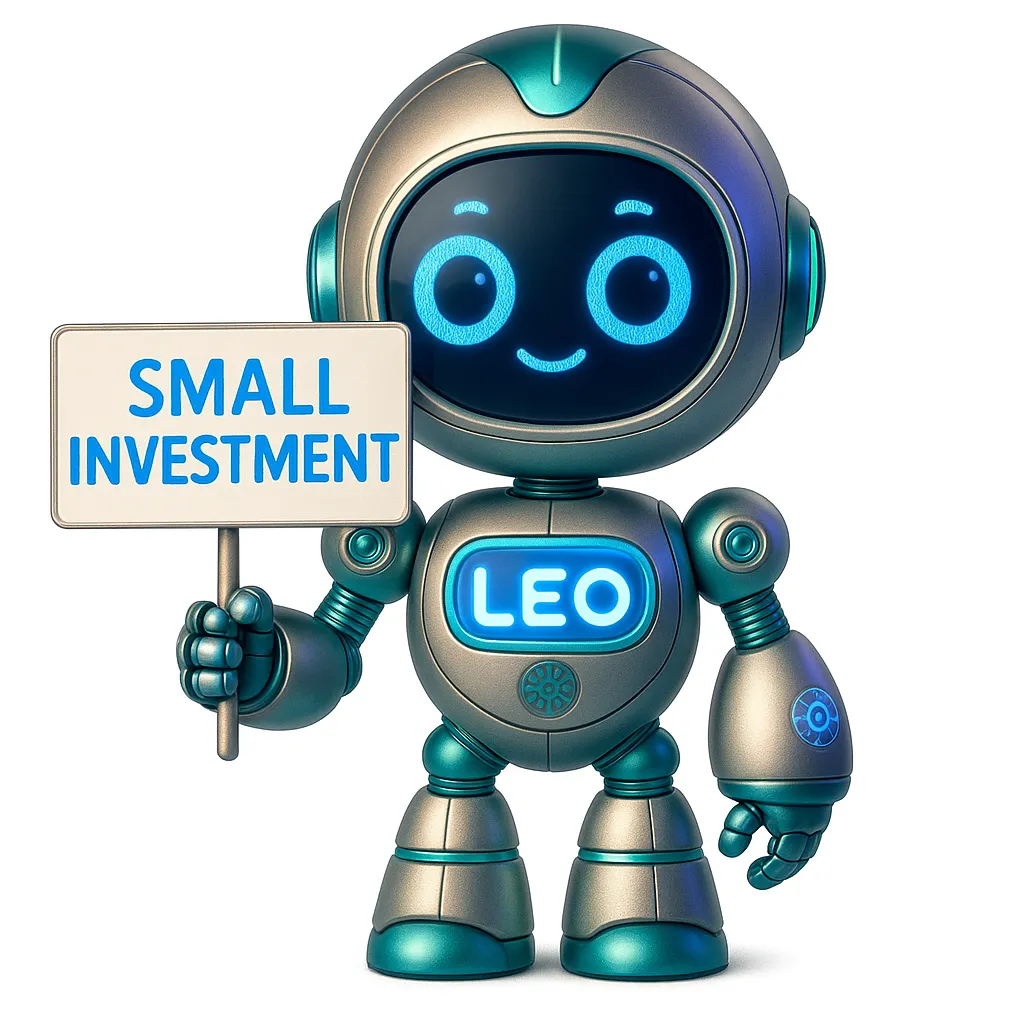
Teach Your Family AI
A self-paced mini-course that helps parents and kids learn AI together in just a few hours. You’ll discover:
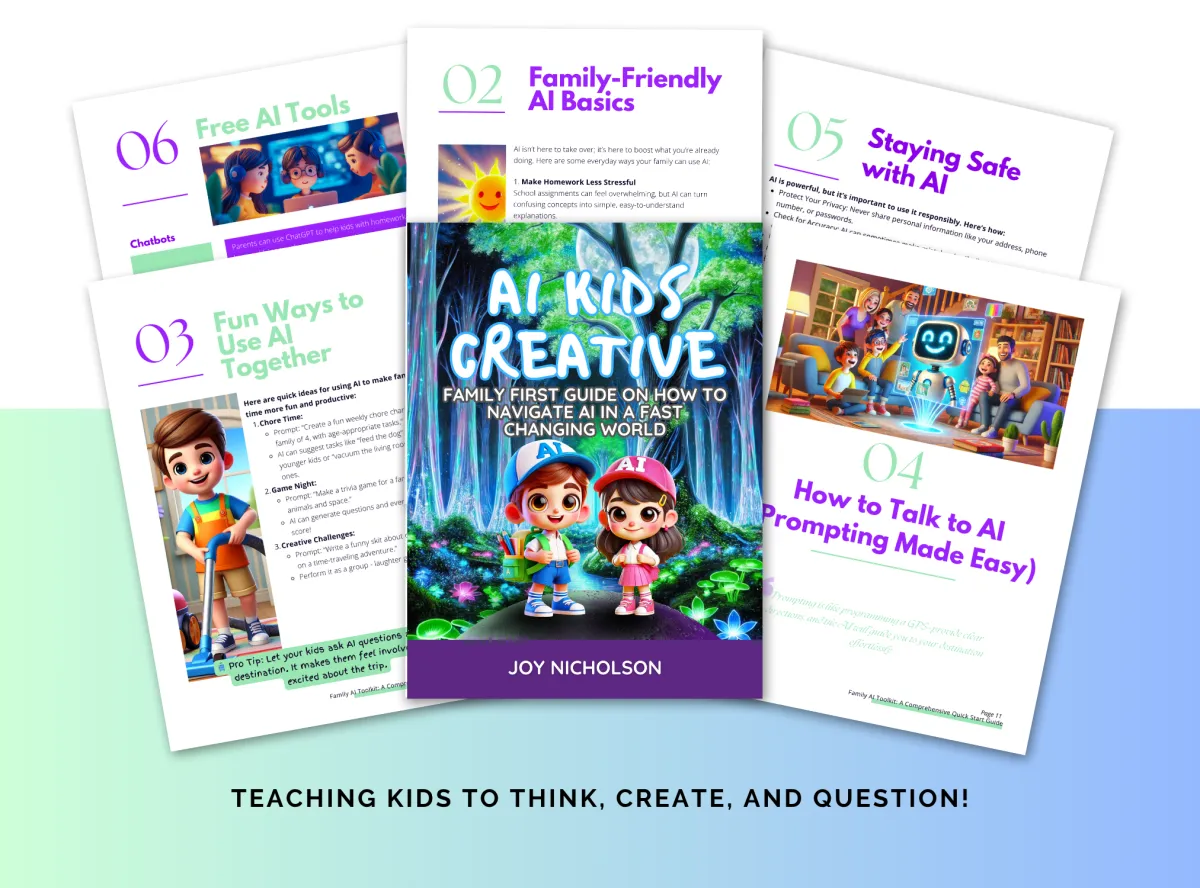
Family First Toolkit
A quick-start guide for families new to AI and includes practical tips, fun activities, safety advice, and tool recommendations.
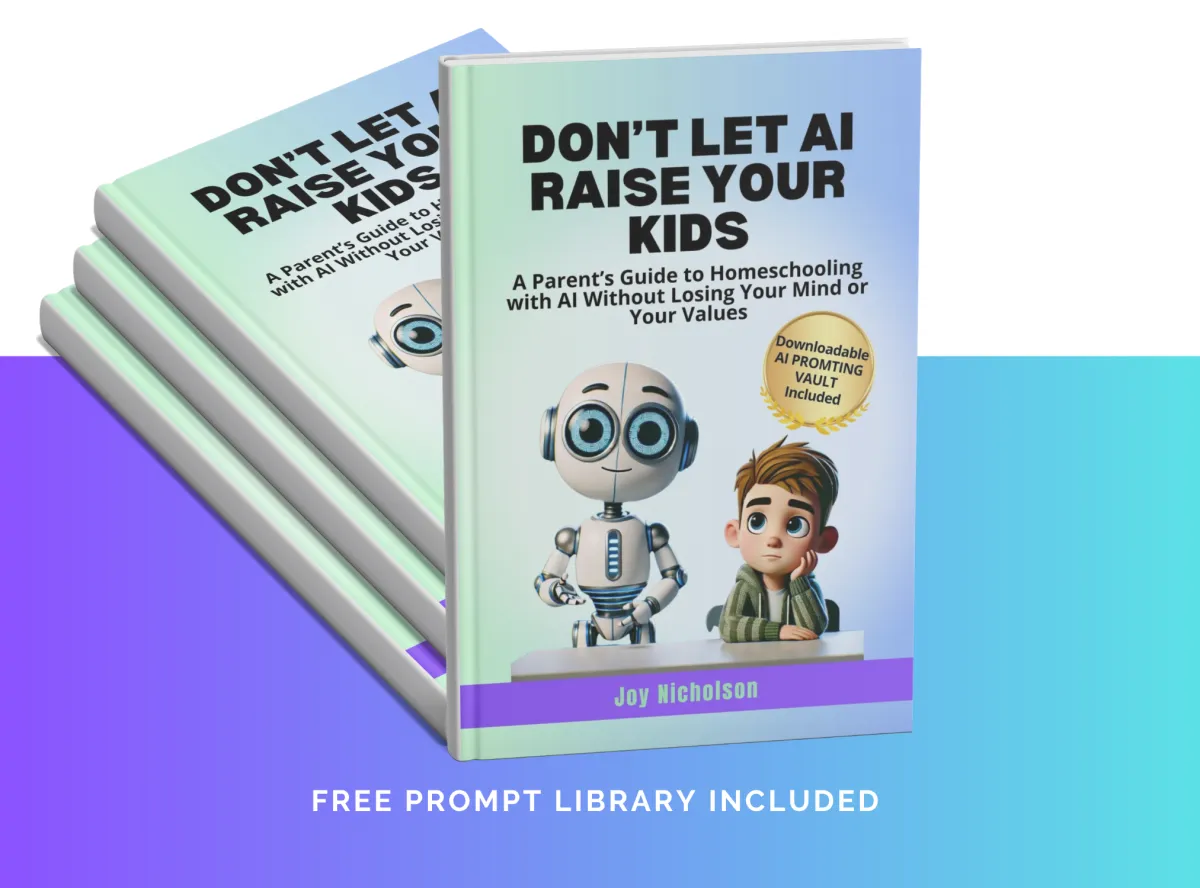
Don't Let AI Raise Your Kids
A Parent’s Guide to Homeschooling with AI, create interest based lessons and more.
Sides hustles for Teens
COMING SOON
Read Our Newest Blogs
AI Has Moved Past Prompts. Business Owners Need to Catch Up.
For the past few years, most business owners have understood AI through one narrow lens: prompts.
Ask it to write a caption. Ask it to rewrite an email. Ask it to generate some content ideas. Ask it to make something sound more polished, more professional, or less like it was typed at midnight after three coffees and a minor identity crisis.
There is nothing wrong with that. For many people, content was the easiest doorway into AI. It was visible, accessible, and immediately useful.
But AI has moved well beyond that doorway now, and a lot of business owners have not noticed.
The most important shift happening right now is not better caption writing. It is the move from AI as a writing assistant to AI as operational infrastructure. And most small business owners are still standing at the first doorway, wondering why the results feel a bit underwhelming.
From Prompting to Workflow
See content credentials

Major companies are no longer asking whether AI can help them brainstorm.
They are asking how AI can be built into the way work actually gets done.
Goldman Sachs is using AI agents to support financial statement audits. Visa is using them to help process credit memos. Anthropic has just launched ten specialised AI agents for banks and insurers. OpenAI has released Workspace Agents inside ChatGPT, a workflow engine you can build around repeatable business tasks, not just a chatbot you open when you are stuck.
These are not cute productivity tricks. These are serious business functions being redesigned around intelligent systems.
The biggest companies in the world are not treating AI as a novelty sitting on the side of the business. They are embedding it into workflows, document processing, customer service, compliance, and internal operations. AI is becoming part of the machinery.
For small business owners, that should be a wake-up call. Not a panic button, and not a "throw everything out and automate your entire soul by next Thursday" moment. But definitely a wake-up call.
Because while many small businesses are still asking AI to help write social media posts, larger organisations are asking a very different question: how can AI remove friction from the business itself?
That is where the opportunity is.
The Real Gap Is Not Curiosity. It Is Implementation.
Australian business owners are not ignoring AI.
Most have heard about it. Many have tested it. Plenty have asked ChatGPT a few questions, created some posts, or played with an image generator at some point. The issue is not awareness.
See content credentials

Deloitte's 2026 State of AI in the Enterprise report found that only 12% of Australian business leaders say generative AI is already transforming how their business operates. Globally, that figure is 25%.
Australia does not have an AI curiosity problem. We have an AI implementation gap.
Curiosity sounds like: "Let's see what this tool can do." Implementation sounds like: "Where does this fit into our business model, our customer journey, our team structure, and our daily operations?" Those are very different conversations. One is exploration. The other is strategy. And strategy is where most businesses are still missing the mark.
People are watching videos, saving posts, testing tools, and asking ChatGPT to brainstorm ideas. That is not bad. But curiosity is not implementation, and playing with AI is not the same as building AI into the business.
Why Random AI Use Creates Random Results
One of the most common patterns I see is business owners treating AI like a random assistant they pull in only when they are stuck.
They need a caption, so they open ChatGPT. They need an email rewrite, so they ask. They need a blog idea, so they generate a list. Then business gets busy, the toddler draws on the wall with permanent marker, life happens, and the tool gets forgotten until next time.
That is not implementation. That is dabbling.
Random AI use creates random results because it is disconnected from the actual business engine. It does not solve the questions that matter most:
Where is time being wasted?
Where are leads falling through the cracks?
Where are clients waiting too long?
Where is the team repeating the same task every single week?
Where is money quietly leaking?
Where are decisions being made without enough information?
Where is the owner still carrying too much in their head?
See content credentials

These are the places where AI creates real leverage. Not because it is impressive, but because it removes friction. The money is usually hiding in the boring parts. The parts that happen over and over. The parts nobody has time to fix. The parts that quietly eat profit, energy, and client trust.
AI Does Not Fix a Messy Business. It Exposes One.
This is the part people do not always want to hear.
AI is powerful, but it is not a business strategy by itself. If your offer is unclear, AI will help you create more unclear content, faster. If your sales process is weak, AI will help you follow up faster with a weak message. If your onboarding is messy, AI can automate the mess.
AI amplifies what already exists. That can be incredibly useful when the foundation is clear. It can also create chaos when it is not.
This is why business owners need to slow down before they speed up. Before adding another tool, the better move is to actually map the business. What are the core functions? How does a lead become a client? What happens after someone buys? What communication happens repeatedly? What tasks are predictable? What decisions need human judgement? What should never be automated?
These questions matter because the goal is not to use more AI. The goal is to build a better business, with the right AI support in the right places.
See content credentials

Governance Is No Longer Optional
There is another side to this conversation that business owners cannot afford to ignore.
As AI moves from content creation into operations, responsibility increases. If AI is supporting customer communication, sales recommendations, financial information, education, or anything involving sensitive data, business owners need to know how it is being used, where human review sits, and what happens when it gets something wrong.
In Australia, APRA has already warned regulated industries that AI governance is lagging well behind AI adoption. And that trickle-down will reach small businesses too. Clients, suppliers, partners, and platforms will increasingly expect AI use to be documented, considered, and responsible.
"The AI did it" is not a defence. It is not a policy. It is a sentence you say right before things get uncomfortable. Good AI implementation is not just about speed. It is about trust.
The Businesses That Win Will Redesign Work
The businesses that benefit most from AI will not be the ones using the most tools, or the ones with the longest subscription list, or the ones chasing every new platform that appears with a dramatic headline and a countdown timer.
The winners will be the businesses that redesign how work gets done.
That means looking at the business as a system. Not just the marketing. Not just the content. The whole operating rhythm. How work enters the business, how it moves through, where it slows down, where errors happen, where clients feel friction, where the owner becomes the bottleneck, where the team needs better support.
When you understand that, AI becomes much easier to place. It stops being a shiny tool. It becomes a lever.
See content credentials

Small Business Owners Do Not Need More Tools. They Need an AI Map.
This is where I believe most small businesses need to focus right now.
Not on finding the perfect prompt. Not on trying to keep up with every update from OpenAI, Anthropic, Google, and whoever else decides to launch something impressive before breakfast.
An AI map is a clear view of where AI can genuinely help, where it should not be used, what workflows could be improved, what data and privacy boundaries need to be respected, what needs to stay human, and what should have been documented and systemised a while ago.
This is the difference between using AI and implementing AI. Using AI is asking for help. Implementing AI is building it into the way the business works.
The question for business owners right now is not "Should I use AI?" Most already are, even if only in small ways. The better question is: "Is AI being used randomly in my business, or is it being used strategically?"
Because those two paths lead to very different outcomes. Random use saves a few minutes. Strategic use changes how work gets done.
AI has moved past prompts. It has moved into workflows, systems, and operations. And the businesses that catch up will not be the ones who know the most jargon. They will be the ones who ask better questions, build better systems, and use AI with both ambition and responsibility.
The opportunity is not to become more artificial. The opportunity is to build a business that runs with more clarity, more consistency, and less unnecessary friction.
That is where AI becomes genuinely valuable. Not as a fancy writing app. As part of how the business works.
Want to know where AI actually fits in your business? The AI Blueprint is a focused 90-minute session where we map your workflows, identify where AI creates real leverage, and build a plan you can actually use. Find out more at ai.joynicholson.com
See content credentials


© 2025 AI Kids Creative. All Rights Reserved. | Privacy Policy | Terms & Conditions | Disclaimer